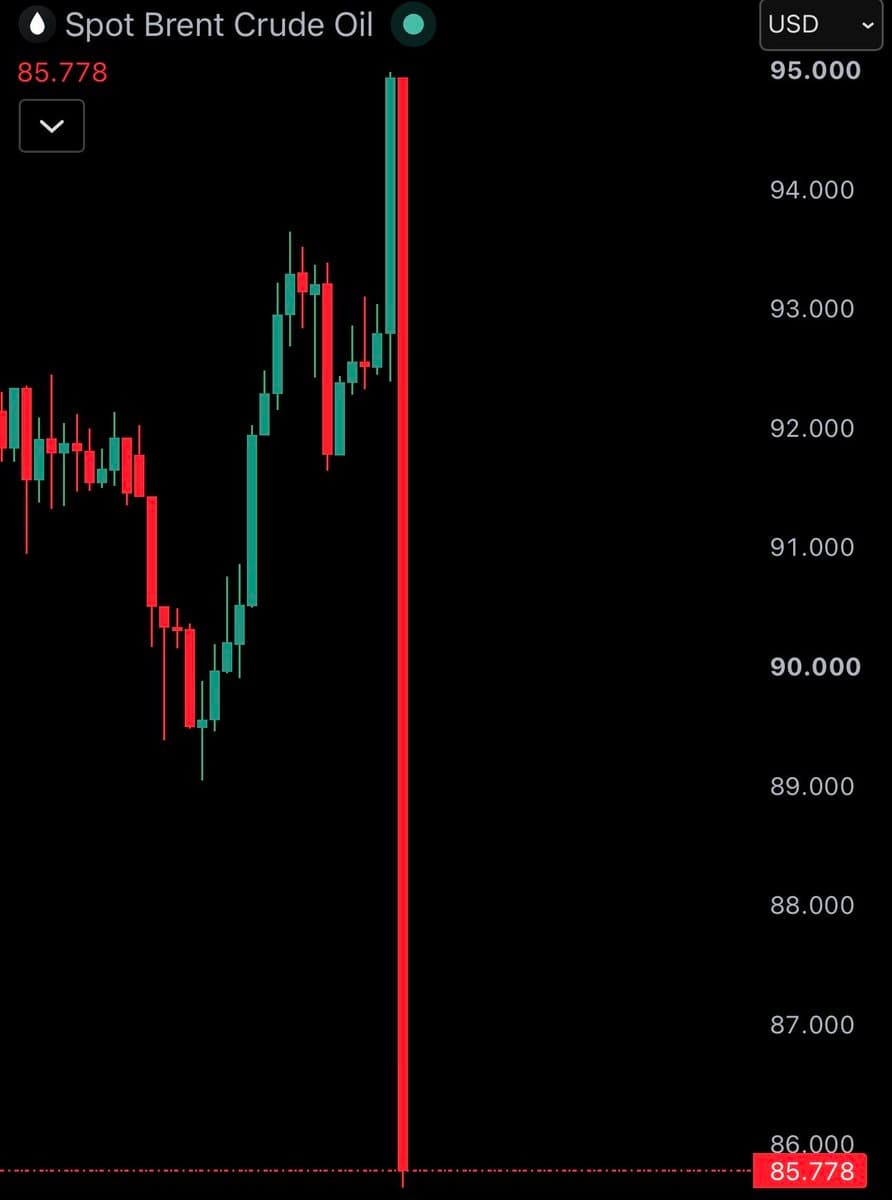
Geopolitical De-escalation Triggers Immediate Selloff
Crude oil markets moved decisively lower following reports that the US and Iran halted military strikes. According to @WatcherGuru, Brent crude oil crashed approximately 10% on the news. The move reflects a classic risk-off unwind: when geopolitical tail risks compress, energy premiums evaporate quickly. Traders who held long positions ahead of potential escalation faced immediate losses as the threat narrative collapsed.
This dynamic illustrates a core mechanic in energy futures - geopolitical premium is priced in until it isn't. Once de-escalation becomes the consensus narrative, the market reprices just as sharply as it rallied on fear. The 10% decline is substantial enough to trigger algorithmic selling and cascade into technical support levels.
Structural Context: Energy Risk Premium Collapse
Crude oil had built a premium into recent price action specifically on Middle East tensions. Supply disruption risk - real or perceived - tends to drive sustained bids in WTI and Brent. When that catalyst evaporates through diplomatic resolution, the market needs a new reason to hold elevated prices.
The 10% move lower suggests traders were positioned for escalation and faced forced liquidations as the thesis broke. Typical energy market structure would show this playing out across Brent (global benchmark), WTI (US-focused), and related futures like heating oil and natural gas. Volume likely spiked during the sell-off as both speculative longs and algorithmic rebalancing hit bids simultaneously.
This is textbook mean-reversion in a commodity driven by geopolitical flow rather than macro fundamentals alone. Without the supply disruption narrative, crude needs fresh support from demand data, inventory reports, or OPEC+ production signals.
What Traders Should Monitor Now
The immediate question is whether this 10% drop establishes a new floor or continues lower if diplomatic progress hardens. Key levels to watch: technical support where the move began (before the de-escalation news), and any fresh macro catalysts like US weekly inventory data or dollar strength.
Read the full analysis.
Enter your email to unlock this article — and get every new Brief delivered the moment it publishes. Free. No spam.
No spam. Unsubscribe anytime. The desk's read, free.
The terminal behind this read. Free.
Open The Desk →Live charts, positioning and macro — arranged your way. No account needed.
Live data behind this story: the real-time crypto terminal →