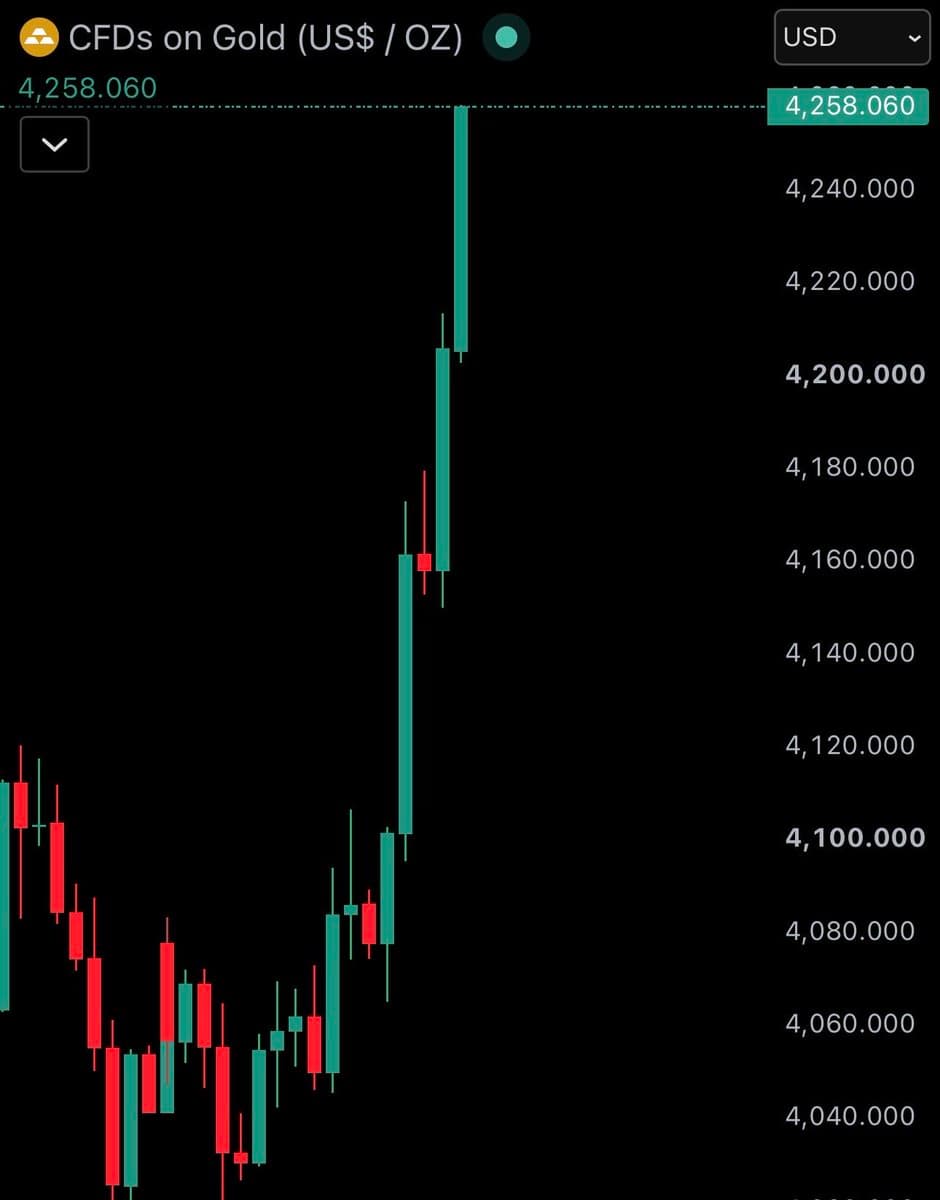
Magnitude of the Move
Gold posted a 4.5% gain according to reports circulating in market commentary, with claims of a $1.3 trillion inflow to total market capitalization. While such figures merit scrutiny - gold's total addressable market and inflow mechanics differ fundamentally from crypto assets - the percentage move itself represents a material single-session advance. For traders, a move of this size triggers position rebalancing across both spot and derivatives markets.
Structural Context: Why Gold Moves
Gold rallies typically stem from three core drivers: real interest rate compression, geopolitical risk-off, or currency weakness (particularly USD depreciation). A 4.5% surge in a single session suggests either a sharp macro event or a confluence of these factors. Traders should cross-reference the timing with: Federal Reserve policy commentary, Treasury yield movements, equity market volatility indices (VIX), and USD index strength. Gold's inverse relationship to real rates means any Fed pivot signal or inflation surprise can compress valuations rapidly. Similarly, safe-haven flows during equity stress or political uncertainty accelerate inflows.
Liquidity and Volume Implications
A move of this magnitude in a single session raises questions about underlying volume and bid-ask spreads. In spot gold markets (London Over-the-Counter and COMEX futures), liquidity is deep during the London and New York sessions, but a reported 4.5% advance suggests either concentrated institutional buying or thin conditions triggering a cascading move higher. Traders positioning ahead of major economic data releases - CPI, employment reports, or central bank decisions - may have front-run this advance. Watch whether the rally holds through the next overlapping session or reverts as profit-taking emerges.
Key Takeaways
- Gold posted a 4.5% advance to reported levels near $4,255, material enough to trigger position rebalancing in both spot and futures markets
- The move likely reflects either real rate compression, safe-haven demand, or USD weakness - verify the macro trigger before committing fresh capital
- Volume and liquidity mechanics matter: confirm whether this advance is supported by institutional volume or thin-market momentum that may reverse
Read the full analysis.
Enter your email to unlock this article — and get every new Brief delivered the moment it publishes. Free. No spam.
No spam. Unsubscribe anytime. The desk's read, free.
The terminal behind this read. Free.
Open The Desk →Live charts, positioning and macro — arranged your way. No account needed.
Live data behind this story: the real-time crypto terminal →