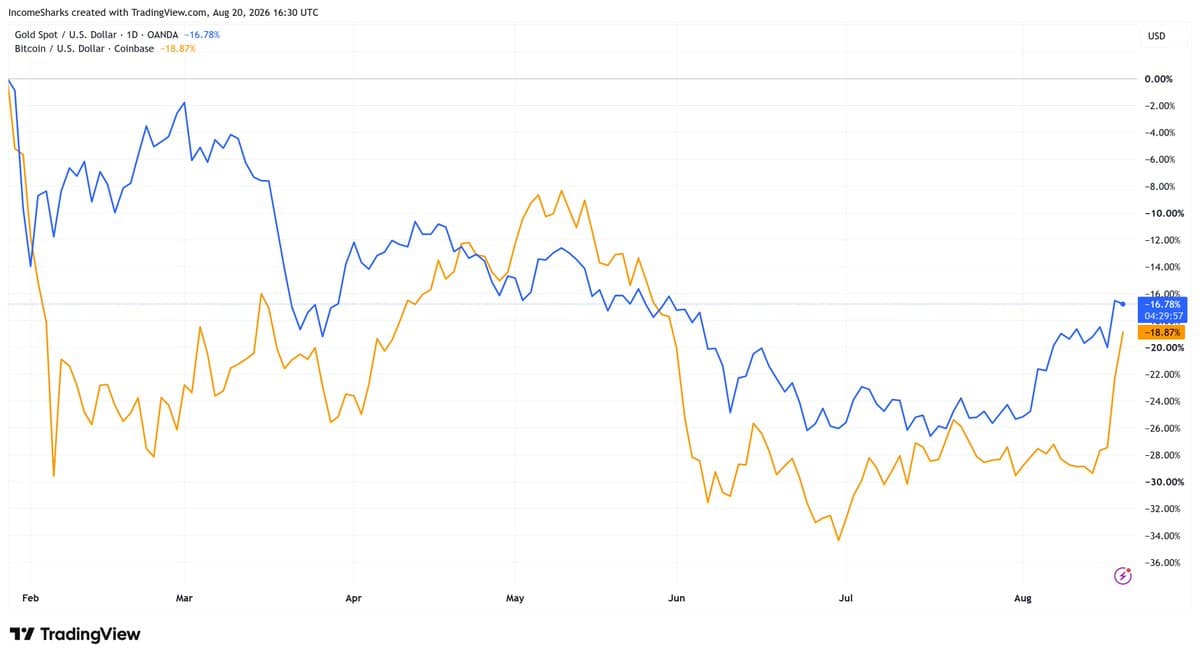
The Correlation Resurface
Gold and Bitcoin have re-synchronized, according to recent market commentary. This correlation matters because it signals traders are responding to the same macro drivers - typically risk sentiment, real rates, and dollar strength. When both assets move together, it suggests broad portfolio hedging or de-risking cycles, not idiosyncratic crypto demand or commodity supply shocks.
This alignment is not unusual during periods of macro volatility. Gold tends to act as a fear gauge when growth expectations dim or central banks signal caution. Bitcoin, despite its risk-asset label, has increasingly traded as a macro hedge in institutional portfolios. When these two move in tandem, it often precedes broader market repricing.
Structural Levels in Focus
Gold's technical setup hinges on a handful of critical support and resistance zones. The source claim that Gold and Bitcoin have synchronized suggests both assets are testing key decision points simultaneously. Without live price data from the source, traders should focus on the 200-day moving average and previous swing highs and lows as reference anchors.
The Asia and London sessions typically set intraday momentum for Gold. If resistance is tested during London hours, New York entry points often follow with either a confirmed break or a rejection back into support. RSI extremes above 70 or below 30 can signal exhaustion, while MACD crossovers above or below the zero line often confirm directional conviction.
Fibonacci retracement levels, particularly the 50% and 61.8% zones between recent swing highs and lows, frequently mark supply and demand clusters where institutions scale positions. Watch for volume confirmation at these levels - a spike in contract open interest often precedes a move through them.
Macro Drivers Behind the Move
Gold's price action is ultimately a function of real interest rates and dollar momentum. When the Fed or other central banks signal hawkish holds or rate hikes, real yields rise and Gold becomes less attractive. The inverse is true during easing cycles or when growth concerns dominate headlines.
Read the full analysis.
Enter your email to unlock this article — and get every new Brief delivered the moment it publishes. Free. No spam.
No spam. Unsubscribe anytime. The desk's read, free.
The terminal behind this read. Free.
Open The Desk →Live charts, positioning and macro — arranged your way. No account needed.
Live data behind this story: breakout flags with a published track record →