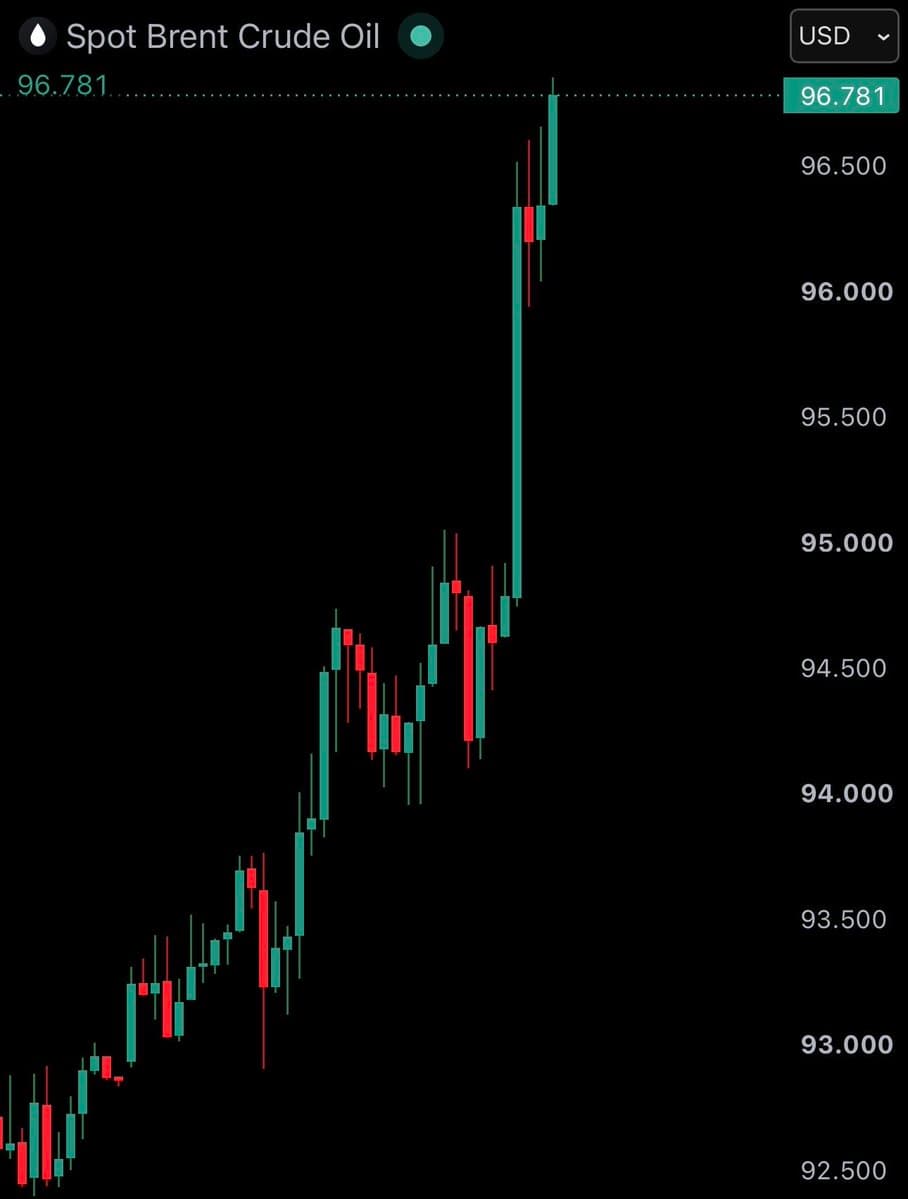
Geopolitical Risk Reprices Oil Markets
Crude oil extended gains in the Asia-Pacific session as reports of US strikes on Iran pushed Brent crude above the $95 level, according to market observers. Geopolitical disruption to supply lines - particularly those transiting the Middle East - historically triggers immediate bid for energy futures. The $95 threshold represents a critical psychological level; any sustained breach above it signals traders are pricing material upside risk to production.
Supply Chain Vulnerability and Price Structure
Iran sanctions and regional conflict create structural supply-side constraints that crude markets price in real time. With global crude inventories sensitive to any production shock in OPEC+ regions, traders watch for cascade effects across downstream energy products. A $5-10 move in WTI during a single session on geopolitical news is not unusual, but it reflects the thinness of physical supply buffers and the sensitivity of forward curve positioning. Hedge funds and algorithmic traders typically front-run such moves, meaning early momentum often compresses as volatility settles.
Technical and Macro Context
The move higher in crude correlates with broader risk-asset repricing - equities and commodities often move in tandem during uncertainty spikes. Macro traders monitor crude as a leading indicator of inflation expectations; a sustained $95+ environment would signal stagflation risk, pressuring longer-duration assets and benefiting short positions in growth equities. However, demand destruction in recession scenarios can reverse these rallies quickly, so the persistence of crude strength depends on whether production risk remains the dominant narrative or demand concern resurfaces.
Market Structure and Trader Positioning
WTI open interest and positioning data matter more than intraday ticks. Large hedge fund longs established ahead of geopolitical flashpoints can unwind violently if headlines cool or if physical supply proves resilient. The options market for crude typically widens volatility surfaces during conflict uncertainty, creating gamma risk for delta-neutral traders and expanding bid-ask spreads. Traders should monitor whether the rally holds through the London-New York overlap session, as institutional rebalancing and technical liquidations can trigger snapback moves.
Key Takeaways
Read the full analysis.
Enter your email to unlock this article — and get every new Brief delivered the moment it publishes. Free. No spam.
No spam. Unsubscribe anytime. The desk's read, free.
The Feed behind this read. $25.
Join The FeedThe Feed $25. Telegram alerts + desk feed.
Live data behind this story: the real-time crypto terminal →